Heating, cooling and beyond
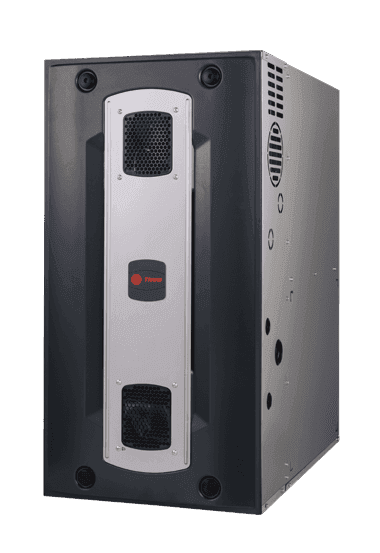 All manufacturers offer an 80% efficient gas furnace and a high efficient (90% plus). The payback to go to a high efficient furnace – over an 80% – is commonly up to ten years. Older homes that aren't as well insulated are a prime candidate for a high efficient gas furnace.
The U. S. Department of Energy is expected – at some point – to require homeowners in northern states (including Ohio) to only install high efficient gas furnaces. The original deadline – May, 2013 – came & went. Industry insiders tell us, however, this will happen sometime soon.
In both efficiencies, most manufacturers offer a single stage furnace, a two stage furnace, a two stage furnace with a variable speed blower and a modulating gas furnace with variable speed and communicating technology.
Hetter Heating & Cooling installs both Trane & Tempstar products. Click on either logo below for that manufacturer's furnace product offerings:
All furnaces listed here have options when it comes to a thermostat. We invite you to check out our THERMOSTAT page to see what best suits you and your home. Trane's multi-featured Comfortlink Communicating thermostat gives you uncommon control over your system. Trane's Energy Command high definition thermostat also communicates and comes with a wireless bridge to enable remote access from your smart phone. Either thermostat is Nexia compatible allowing you to add cameras, light ports & locks to your home that can all be accessed from your smartphone.